
What You’ll Learn in This Blog
- How commercial kitchen automation can reduce repetitive tasks and make better use of available labor
- Why programmable cooking can improve consistency and simplify kitchen processes
- How high-throughput equipment can help kitchens keep pace with demand
- How to evaluate labor-saving commercial kitchen equipment based on your operation
Commercial kitchens are being asked to accomplish more with fewer resources.
Labor challenges are only part of the equation. Operators are also balancing rising costs, limited space, changing menus, high customer expectations, and the need to maintain consistent results from one shift to the next.
That is where commercial kitchen automation and smarter equipment can make a meaningful difference.
The goal is not simply to remove people from the kitchen. It is to reduce repetitive, time-consuming tasks and give employees equipment that makes their jobs easier to execute consistently.
From automated grilling and programmable cooking to high-throughput ovens and more flexible production schedules, today’s equipment can help operators get more from the staff, space, and time they already have.
At High Sabatino Associates, we work with foodservice operators, dealers, consultants, and designers across Maryland, Washington, DC, Virginia, and West Virginia to identify equipment solutions that address real operational challenges.
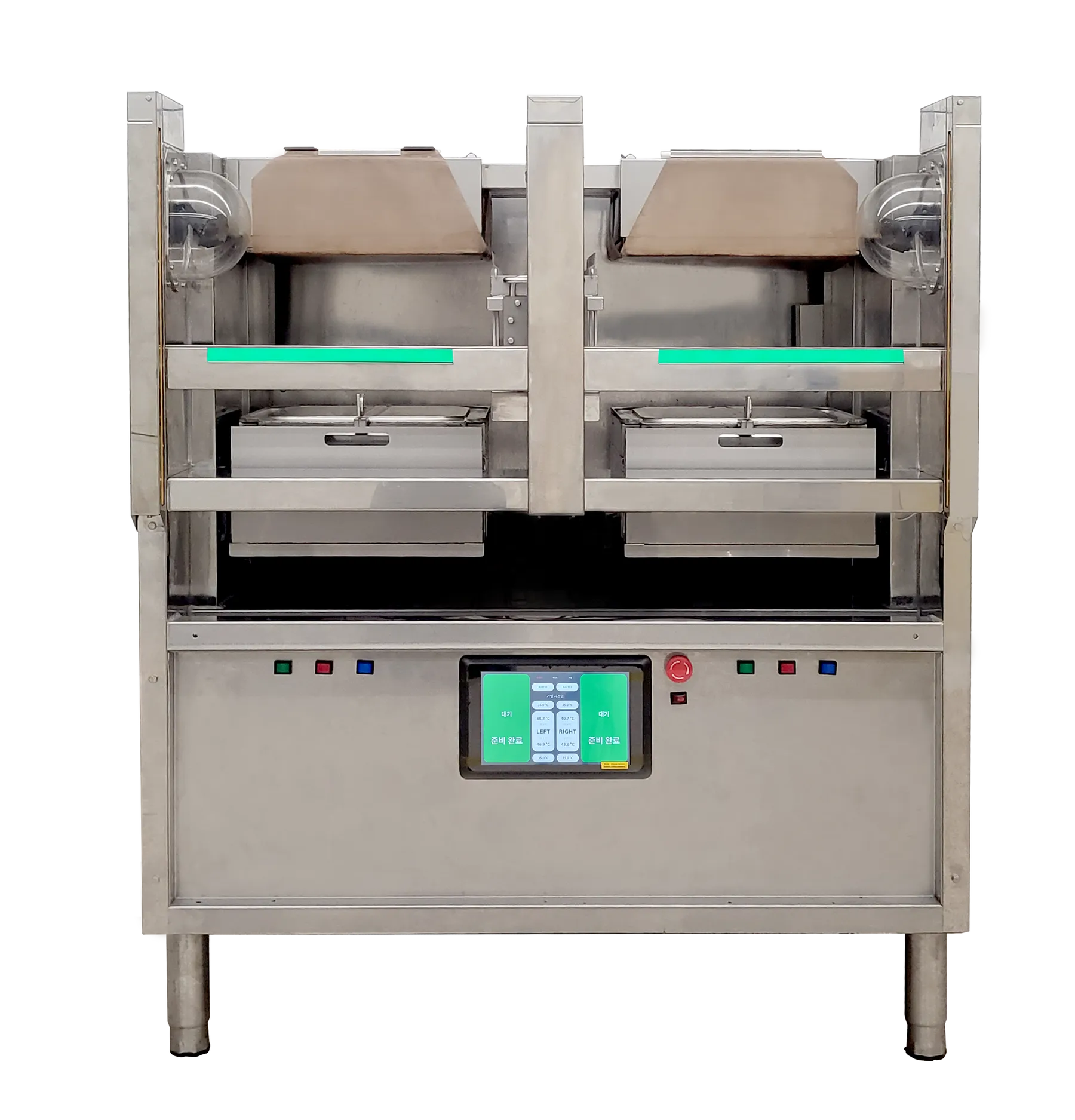
Reduce Repetitive Grill Work with ANIAI Robotic Grills
Few areas demonstrate the potential of commercial kitchen automation as clearly as the grill station.
The ANIAI Alpha Grill uses double-sided cooking and programmed recipes to create a more automated grilling process. A built-in robotic spatula removes finished food to a holding tray and then scrapes the grill surface between cooking cycles.
The benefit goes beyond speed. Instead of remaining tied to the grill throughout every cook cycle, employees can turn their attention to assembly, prep, restocking, or other responsibilities.
Programmed recipes also help create a repeatable process across employees and shifts. For QSR, fast-casual, convenience, and other high-volume operations, that combination can help a leaner team keep production moving during busy periods.
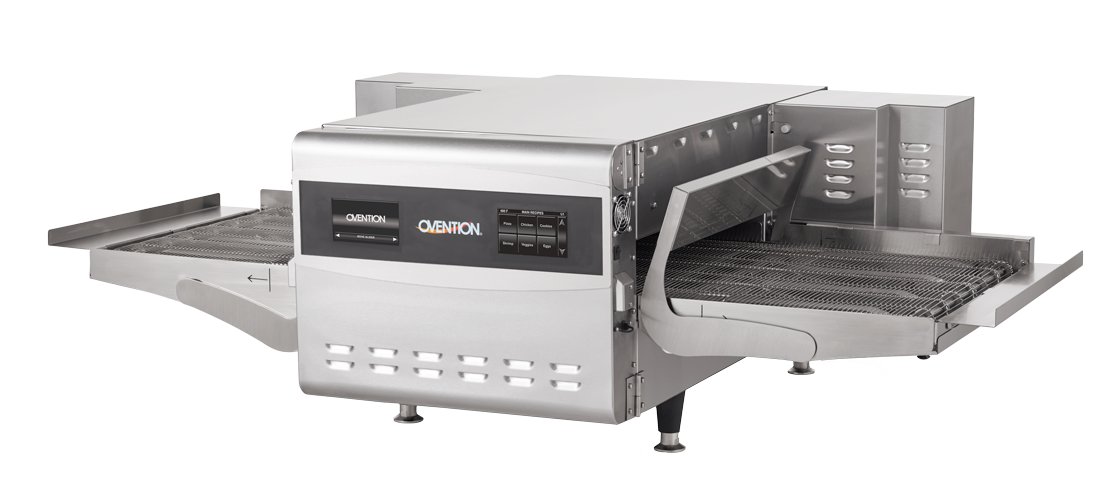
Increase Throughput with Ovention Conveyor Ovens
Automation does not always mean robotics. Sometimes commercial kitchen efficiency comes from simplifying how food moves through the cooking process.
The Ovention Conveyor Series is designed for operators looking for high-throughput cooking with programmable control. Precision Impingement® technology uses heated air for fast, consistent cooking, while operators can program cook times, blower speeds, and recipes.
That can be especially useful when kitchens need to keep pace with high order volume while maintaining a repeatable process.
Instead of requiring constant adjustments from employees, established recipes help simplify operation and keep food moving through the kitchen. For busy foodservice operations, reducing those extra steps can make the cooking process easier to manage during peak periods.
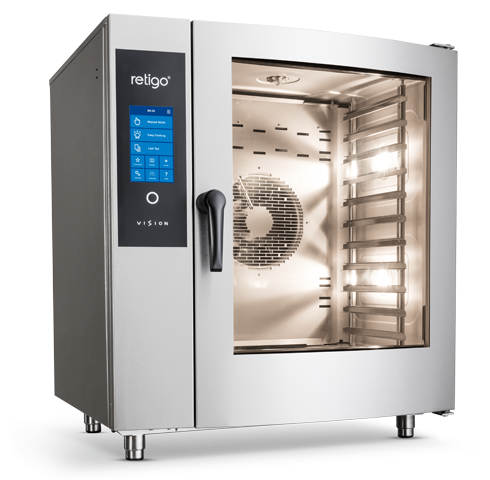
Simplify Cooking with Retigo Combi Ovens
Efficiency is not only about making food faster. It is also about reducing how much attention each cooking process requires.
Retigo Vision combi ovens combine hot air, steam, and combination cooking in one platform, allowing operators to handle a wide variety of cooking applications with a single piece of equipment.
Programmable cooking helps standardize recipes and reduce the number of manual adjustments employees need to make during production. Depending on the model and configuration, features such as automatic start, programmable cooking, and automatic cleaning can further simplify day-to-day operation.
The versatility of a combi oven can also help kitchens accomplish more within a limited footprint. Instead of relying on separate equipment for multiple cooking methods, operators can use one platform for a broader range of production needs.
Convection Oven vs. Combi Oven: What Changes in the Workflow?
Consider a kitchen producing the same high-volume menu item batch after batch. The equipment choice can affect more than cook time. It can also change how much attention the process requires from staff and how much finished product makes it to the plate.
With a standard convection oven:
Employees may need to spend more time monitoring the cooking process and making manual adjustments between batches. Because convection cooking relies primarily on circulating dry heat, moisture loss during cooking can also affect finished product yield.
With a programmable combi oven:
Operators gain greater control over temperature, humidity, and cooking parameters through established programs. Depending on the food and application, this can reduce cook time and hands-on adjustments, create a more repeatable cooking process, and help retain moisture to improve finished product yield.
What should you measure?
Rather than relying on equipment specifications alone, test the same menu item under comparable conditions. Look at total cook time, hands-on employee involvement, finished product weight and yield, and consistency from batch to batch.
These are exactly the kinds of factors operators can evaluate during a demonstration at High Sabatino’s Jessup test kitchen to determine whether a different cooking process could make a measurable difference in their operation.
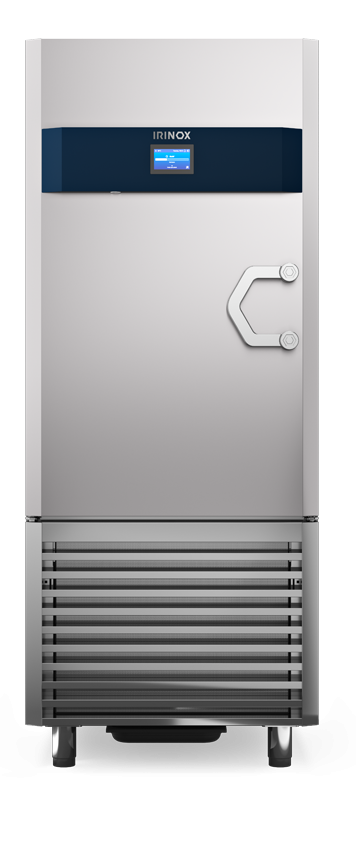
Create Production Flexibility with Irinox Blast Chillers
Sometimes doing more with less is not about cooking faster. It is about having greater control over when production takes place.
The Irinox EasyFresh® Next blast chiller rapidly chills or freezes freshly prepared food while helping maintain its properties. This can give operators more options for organizing production instead of concentrating every task immediately before service.
For kitchens managing significant production volume, the ability to prepare certain foods at more manageable times, rapidly chill them, and incorporate them into a planned production schedule can help create a more organized workflow.
That can be especially valuable in operations such as schools, healthcare, restaurants, catering, and commissaries where production demands and available labor can vary throughout the day.
Looking Ahead
There is no single piece of equipment that solves every labor or efficiency challenge. The best place to start is by identifying where employees are spending time on repetitive tasks, closely monitoring equipment, or struggling to keep pace during peak periods.
At High Sabatino Associates, we’re proud to represent manufacturers like ANIAI, Ovention, Retigo, and Irinox that address these challenges in different ways. From automating repetitive grill tasks and increasing throughput to simplifying programmable cooking and creating more flexible production workflows, the right equipment can help operators make better use of the resources they already have.
Our 4,500 sq. ft. demonstration kitchen in Jessup, Maryland gives operators, dealers, consultants, and designers an opportunity to evaluate equipment based on the things that actually matter to an operation.
Bring your menu, production goals, and staffing challenges. Test your food, compare workflows, and measure factors such as throughput, cook time, hands-on labor, consistency, and product yield before making an equipment decision.
Because doing more with less shouldn’t simply mean asking your team to work harder. It should mean finding better ways to work.
Ready to see what commercial kitchen automation could look like in your operation? Contact High Sabatino Associates to schedule a demonstration at our Jessup test kitchen.
Frequently Asked Questions
How can commercial kitchen automation help an operation with limited staff?
Commercial kitchen automation can reduce the amount of employee time spent on repetitive or closely monitored tasks, allowing staff to focus on other responsibilities throughout the kitchen.
Does kitchen automation mean replacing employees?
Not necessarily. Many automated and programmable solutions are designed to support employees by reducing repetitive work, simplifying processes, and allowing staff to manage multiple responsibilities more effectively.
How can programmable equipment improve consistency?
Programmable equipment allows operators to establish cooking parameters for menu items and repeat those processes across batches, employees, and shifts.
What labor-saving commercial kitchen equipment can help improve efficiency?
The right solution depends on the operation. Automated grills can reduce hands-on grill work, high-throughput conveyor ovens can help keep pace with order volume, combi ovens can consolidate cooking processes, and blast chillers can provide greater flexibility around production.
How do I know where automation would make the biggest difference in my kitchen?
Start with the workflow. Identify where employees spend the most time performing repetitive tasks, monitoring cooking processes, waiting on equipment, or struggling to keep pace during peak periods. Those areas can help determine where an equipment change may provide the greatest benefit.
